
Intercom Fin alternative for small business (2026)
Fin is capable — but per-resolution pricing means you pay more as it works better. When that math turns against a small store, and what to look for instead.

If you're looking for an Intercom Fin alternative, start by being fair to Fin: it's a genuinely capable agent. The reason small stores go looking isn't quality — it's the pricing model. Fin charges per resolution, which means your AI bill rises as the AI succeeds, on top of an Intercom platform subscription built for larger teams. For a store doing modest volume, that math can quietly turn against you.
This is the sibling to our buyer's guide — that one is how to choose in general; this one is specifically about Fin, the per- resolution math, and what an alternative should actually give a small store. If you're still mapping the basics, start with AI customer service for a small business.
Is Intercom Fin worth it for a small store?
For capability, yes. For fit, it depends — and the deciding factor is usually pricing structure, not the AI. Fin sits inside Intercom's platform, which is priced and designed around larger support organizations: seats, tiers, and add-ons that make sense at scale and feel heavy for a team of one to five. The agent itself resolves well; Intercom self-reports around 66% Fin resolution (a vendor number with disputed methodology — treat it as directional, per our note on how resolution rates are counted).
The mismatch is structural. A small store wants a predictable monthly number and an agent that covers its channels. Fin gives you a bill that moves with volume and a platform sized for bigger teams. Neither is a flaw in the product — it's a fit problem for your stage.
How Fin's pricing actually works
Fin is priced per resolution — roughly $0.99 per resolution, with a monthly resolution minimum, layered on an Intercom platform subscription (per Intercom's published pricing, mid-2026 — re-check it before you decide, because it changes). Two consequences matter for a small store:
- Your AI cost scales with success. The better Fin resolves, the more you pay. That's defensible — you pay for outcomes — but it's the opposite of the fixed cost most small stores budget around.
- "Resolved" is counted by the vendor. When a resolution can be assumed rather than confirmed, the metric you're billed on is the one the vendor defines. A customer who gives up can count the same as one who got a real answer — the distinction we've written about before.
None of this makes Fin bad. It makes it a model you have to model — and for a young store, the base plus minimum can dominate before the per-resolution part even helps.
The break-even math, worked honestly
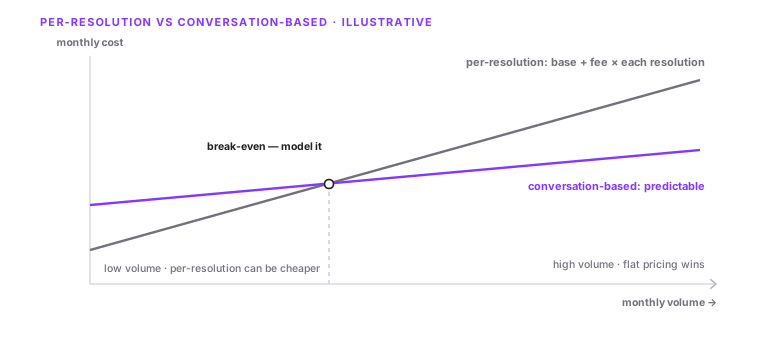
There's no universal threshold — it depends on your platform base, your minimum, and your resolution volume. But the shape is always the same, and you can work it out in five minutes:
- Per-resolution cost = platform subscription + (price per resolution × resolutions per month), floored at the monthly minimum.
- Conversation-based cost = your plan tier for your conversation volume — one number, regardless of how many resolve.
Plug in a low month and a busy month. On the quiet month, a small store often pays the platform base and the minimum for resolutions it didn't use. On the busy month, the per-resolution line keeps climbing while a flat plan doesn't. Somewhere between those is your break-even; above it, predictable pricing wins. The point isn't that per-resolution is always worse — it's that you should know your crossover before you sign, not after the invoice.
What a good Fin alternative should give a small store
Price model aside, judge an alternative on whether it does the job a small store actually needs. Five things to check:
| Check | Why it matters |
|---|---|
| Acts on your systems | Order lookups, cancels, refunds — not just FAQ answers. This is agentic vs rule-based. |
| Covers your channels | WhatsApp, Instagram and web from one inbox — where small stores actually sell. |
| Predictable pricing | Conversation-based or flat, so the bill doesn't move with success or spike in a busy month. |
| Fast to launch | Live in days, not a quarter-long enterprise rollout. |
| Honest measurement | Confirmed resolution and CSAT, not an assumed-resolution headline. |
Notice what's not on the list: a headline resolution-rate leaderboard. Those numbers are vendor-defined and rarely comparable, which is exactly why the buyer's guide argues you should test on your own inbox instead of trusting a number.
Where Vivollo fits — and where Fin still makes sense
We built Vivollo's pricing to be the thing per-resolution isn't: conversation- based, with no per-resolution charge and no seat tax — one agent across every channel, priced by conversation volume so your cost is predictable as you grow. In our deployments the agent resolves 60–75% of conversations (İnce Topuk 66%, Turna 72%), and it acts on your store — orders, catalog, returns — across WhatsApp, Instagram and web.
To be fair about it: if you're a larger team already living inside Intercom, with the seats and workflows to match, Fin is a reasonable choice and switching has real switching cost. The alternative case is strongest for a small store that wants predictable cost, its own channels, and an agent that acts — which is most stores of one to five.
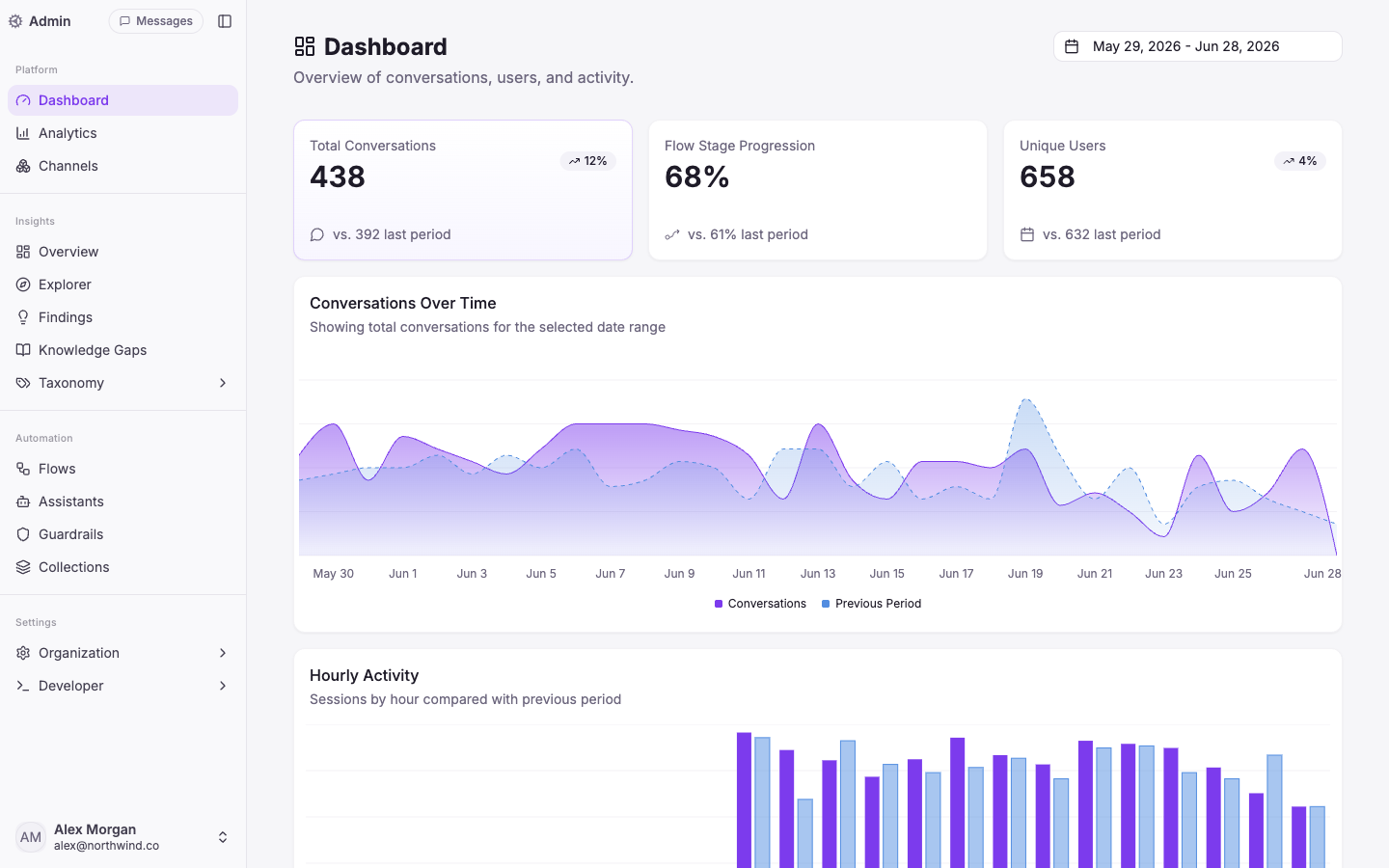
If you're weighing Fin against a conversation-based agent for a small store, the honest first step is your own numbers: your volume, your channels, your resolution math. See Vivollo's pricing and run it against your last invoice — that comparison, not a leaderboard, is what should decide it.
Common questions
- Is Intercom Fin good for a small business?
Fin is genuinely capable. The question isn't quality — it's fit. Its per-resolution pricing and Intercom's platform tiers are built for larger support teams; for a small store the pricing model, not the AI, is usually what doesn't fit.
- How much does Intercom Fin cost?
Fin is priced per resolution — about $0.99 per resolution, with a monthly resolution minimum, on top of an Intercom platform subscription (per Intercom's pricing, mid-2026; re-check, it changes). So your AI bill rises as the AI resolves more.
- What's the best Intercom Fin alternative for a small store?
The one whose pricing is predictable at your volume and that acts on your systems and channels. Conversation-based or flat pricing removes the per-resolution surprise; see how to choose for a small store.
- Does per-resolution pricing mean I pay more when the AI works better?
Yes — that's the structural catch. The better it resolves, the higher your bill, and "assumed" resolutions can pad it. It aligns cost with success, which large teams accept and small stores often find unpredictable.
- Can I keep WhatsApp and Instagram on a Fin alternative?
With the right one, yes — the same agent should run across WhatsApp, Instagram and your website from one inbox, so you're not tied to a single channel or a per-seat model to add them.
About the author

Bilgehan YılmazCo-Founder · Growth & CX
Co-founder of Vivollo and a serial entrepreneur on the growth and customer-experience side — also founder of DüğünBuketi.com and Grispi. He writes about turning support conversations into revenue.
Bilgehan Yılmaz →Keep reading
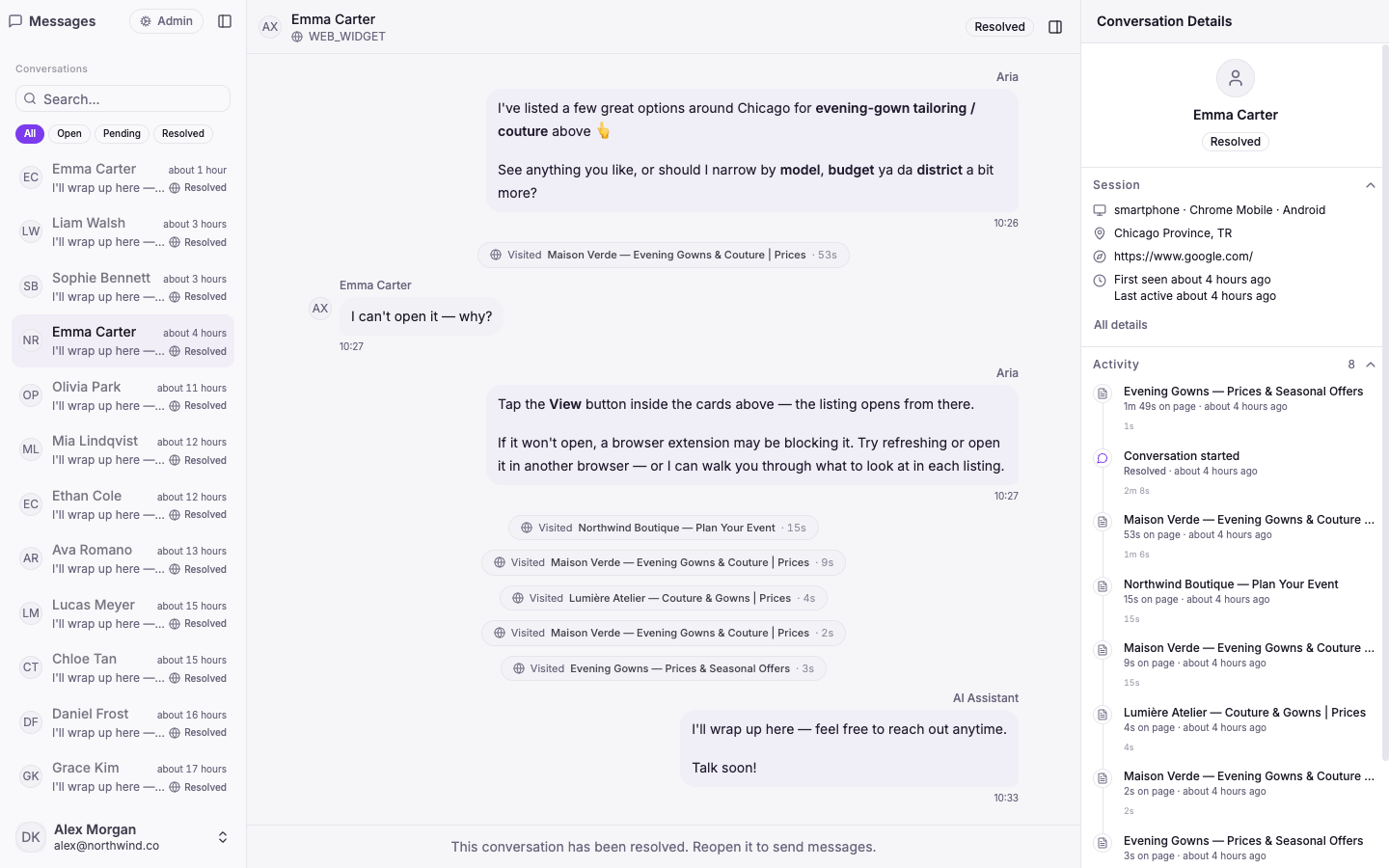
AI customer service for small business: what AI handles, what you keep
An AI agent resolves 66–72% of a small store's conversations — orders, sizes, returns — so a team of 1–5 covers the rest. What works, and how to start.
Best AI customer support software for small business (2026)
An honest buyer's guide: why the resolution-rate leaderboards mislead, what to check on pricing, and how a small store should actually choose.
After-hours customer service for a small online store
Your store is open 168 hours a week; a small team covers ~50. An AI agent closes about two-thirds of overnight chats in ~8s and queues the rest for morning.