
AI-to-human handoff: design it so nobody repeats themselves
AI resolves 66–72% of conversations in our deployments — handoff governs the rest. What triggers it, what context travels, and what happens after.

Ask any vendor about AI support and you'll get a resolution number. Ours is already on the table: in our deployments, an AI agent resolves 66–72% of conversations without a human, with a median first reply around 8 seconds. The question almost nobody asks is the one that decides whether that number holds up in production: what happens to the other third?
That's the handoff's job. It is not a failure mode, and it is not a "talk to an agent" button buried three menus deep — it's the product decision that governs the ~30% of conversations the AI shouldn't touch. Design it well and the automated 70% works, because the agent never has to force an answer it doesn't have. Design it badly and every escalation opens with the sentence customers hate most: "Could you explain the issue again?"
Three questions separate a designed handoff from an accidental one: what triggers it, what travels with it, and what happens after. Here's how we answer each.
When should an AI chatbot hand off to a human?
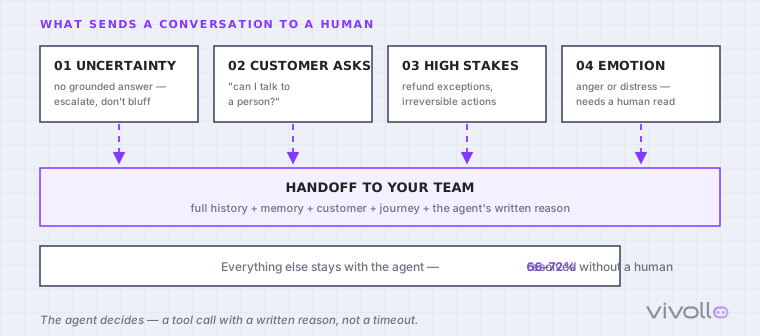
The agent itself should make the call, conversation by conversation — and it should escalate in four situations: when it's uncertain, when the customer asks for a person, when the action is high-stakes, and when the emotion in the thread needs a human read.
Mechanically, in Vivollo this is a tool call. Escalation sits alongside "look
up the order" and "check stock" in the toolbox of
an agent that acts, not just chats: mid-conversation, the
agent decides this one needs a person and calls handoff_to_agent — with a
written reason, in its own words, for why. That's a different animal from
escalation in a rule-based bot, where
"handoff" means a keyword tripped a rule, or the customer typed AGENT three
times in growing frustration.
The four triggers, concretely:
- Uncertainty. The agent can't ground an answer in your catalog, policies or docs — usually because the answer isn't written anywhere it can read. The right move is to say so and escalate, not bluff. One invented returns policy costs you more than a hundred handoffs.
- The customer asks. "Can I talk to a person?" is a trigger, full stop. Making someone argue with a bot for the privilege of reaching a human is how you lose them.
- High-stakes actions. Refund exceptions, a complaint about an order that already went wrong twice, anything irreversible. The agent can prepare these — pull the order, summarize the history — but a person should press the button.
- Emotion. Anger, distress, a customer visibly on the way out. Models can detect sentiment; they shouldn't be the ones absorbing it.
It's counterintuitive but worth repeating from our resolution-rate breakdown: a clean handoff to a human raises your effective resolution rate, because it stops the AI from forcing bad answers on the 30% it shouldn't touch. An agent that escalates on uncertainty isn't failing — it's doing exactly the job you'd want a junior teammate to do.
What must travel with the handoff
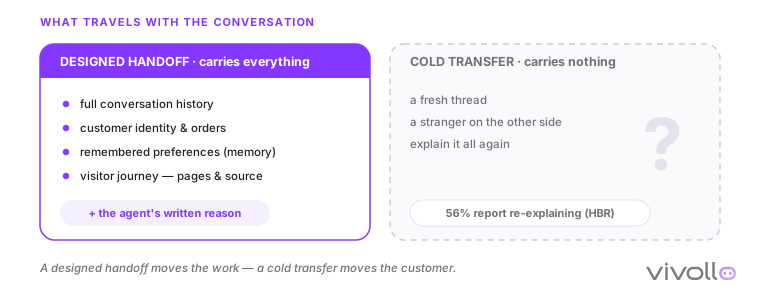
Everything the AI knew — or the customer pays for the transfer. In Vivollo a handoff moves five things into the human inbox: the full conversation history, the customer's identity with their orders and past conversations, remembered preferences, the visitor journey — which pages they browsed, where they came from — and the agent's written reason for escalating.
That last one is the underrated piece. Because the agent wrote down why — "customer wants a refund outside the 14-day window, order already replaced once" — the human doesn't triage from scratch. They open the thread already knowing what the judgment call is.
The alternative is the cold transfer, and customers know it intimately. In the customer-effort research published by Harvard Business Review, 56% of customers report having to re-explain an issue and 59% report being transferred — and those effort spikes, not a lack of "delight", are what the authors found drives disloyalty. An AI handoff that opens a fresh ticket with none of the context isn't automation; it's automating your way into that statistic.
Context should survive tool boundaries, too. If your team already works in a helpdesk like Connexease, the handoff can assign the conversation to a specific agent or group with two-way sync — one thread everywhere, instead of a copy-paste between systems.
The handoff isn't the end of the conversation
After the human resolves the judgment call, automation resumes — the handoff is a segment of the conversation, not the end of it. The customer stays in one thread the whole time; on your side, the thread moves between two kinds of workers.
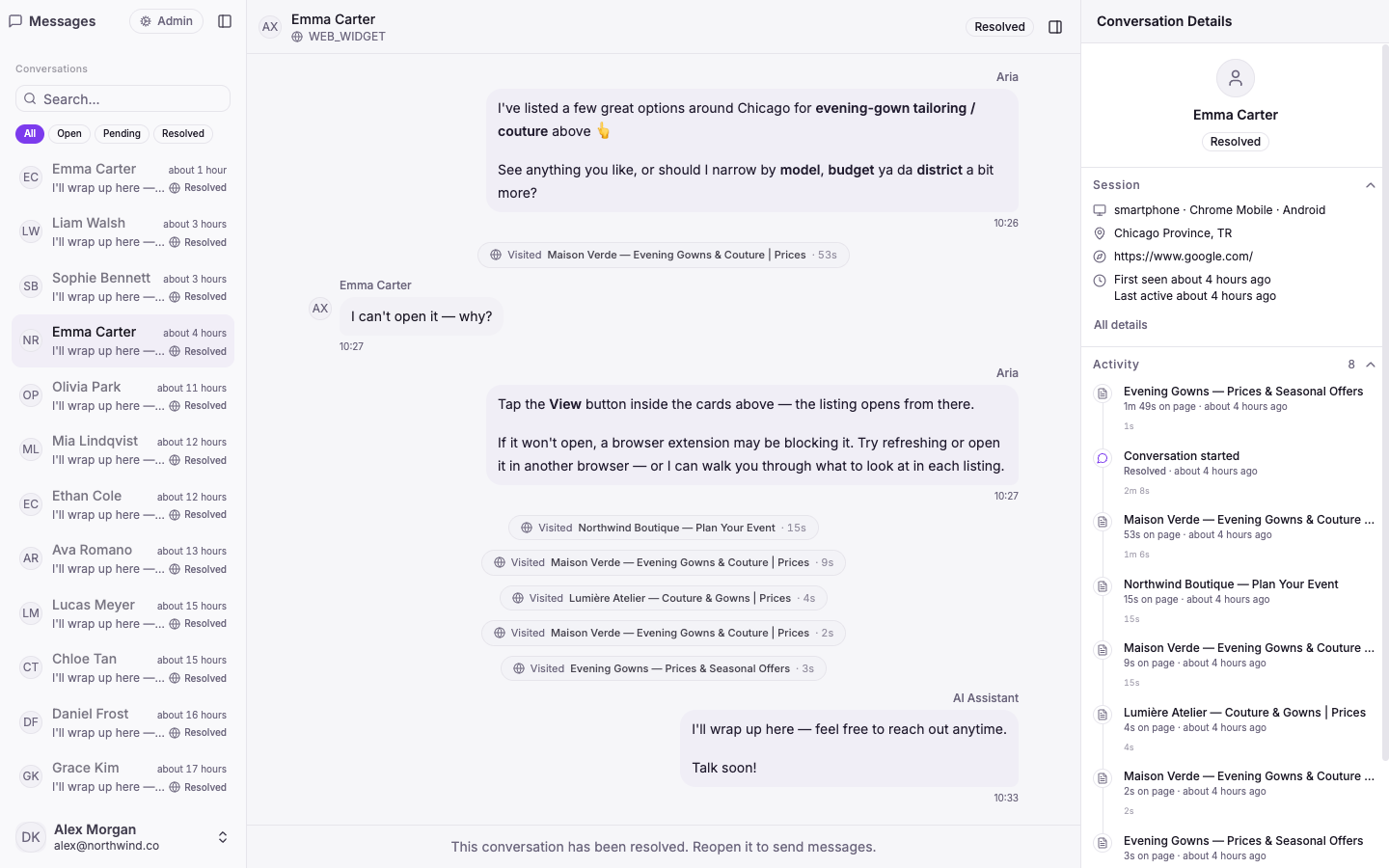
In practice, escalations land in a real-time inbox where your team sees the conversation, the customer's context and the AI's reason side by side. The person handles the exception — approves the out-of-policy refund, writes the apology that needs a name on it — and hands the thread back. The follow-up tracking question, the "one more thing" that arrives ten minutes later: back to the agent.
This is the operating model we recommend for small support teams in general — the AI on the front line, your team as the backup — and the handoff is the seam that makes it one system instead of two. The seam has a time dimension, too: at 2 a.m. there may be nobody to catch the escalation, which changes what the agent should do with it — a problem big enough that we treat after-hours support as its own design question.
Sales handoffs are handoffs too
Everything above reads like a support pattern, but the highest-value handoff in our data is a sale. DüğünBuketi, a wedding marketplace, runs its agent on open-ended planning conversations, and 38% of chats become qualified leads. The agent does the qualification — date, budget, what the couple actually needs — and when a conversation is ready to close or clearly high-value, it hands the thread to a salesperson with the whole conversation attached, no repeating. The human opens with an answer, not a question.
The pattern is identical to the support version; only the trigger differs — "ready to buy" instead of "needs an exception". The AI does repetitive qualification at scale, the person takes the moment that needs judgment and a relationship. If your inbox doubles as a sales channel — and if you sell through Instagram DMs, it already does — the warm-lead handoff deserves the same design care as the complaint handoff. It's the one with revenue on it.
The real test of any AI support setup isn't the demo where the bot answers a shipping question — it's the moment a conversation gets hard. Ask any vendor to show you the handoff: who decides, what travels, what happens after. Ours is Live Handoff, and it's the reason the automated 70% works at all.
Common questions
- When should an AI chatbot escalate to a human?
In four situations: when it can't ground an answer in your content, when the customer asks for a person, when the action is high-stakes (refund exceptions, anything irreversible), and when the emotion in the thread needs a human read. The agent itself should make that call per conversation — with a written reason — not a keyword rule.
- Does the customer have to repeat themselves after handoff?
Not if the handoff is designed. The conversation should land in the human inbox carrying the full history, the customer's identity, remembered preferences, the visitor journey and the AI's written reason for escalating — so the person picks up mid-thread, not from zero.
- Can the AI take back over after the human replies?
Yes. In Vivollo the human resolves the judgment call and automation resumes in the same conversation — the handoff is a segment of the thread, not the end of it.
About the author

Davut KemberCo-Founder & Full-Stack Developer
Co-founder of Vivollo, building the agentic support platform end to end. He writes about the engineering reality of AI agents that take real actions — and what actually moves resolution rates and reply times.
Davut Kember →Keep reading
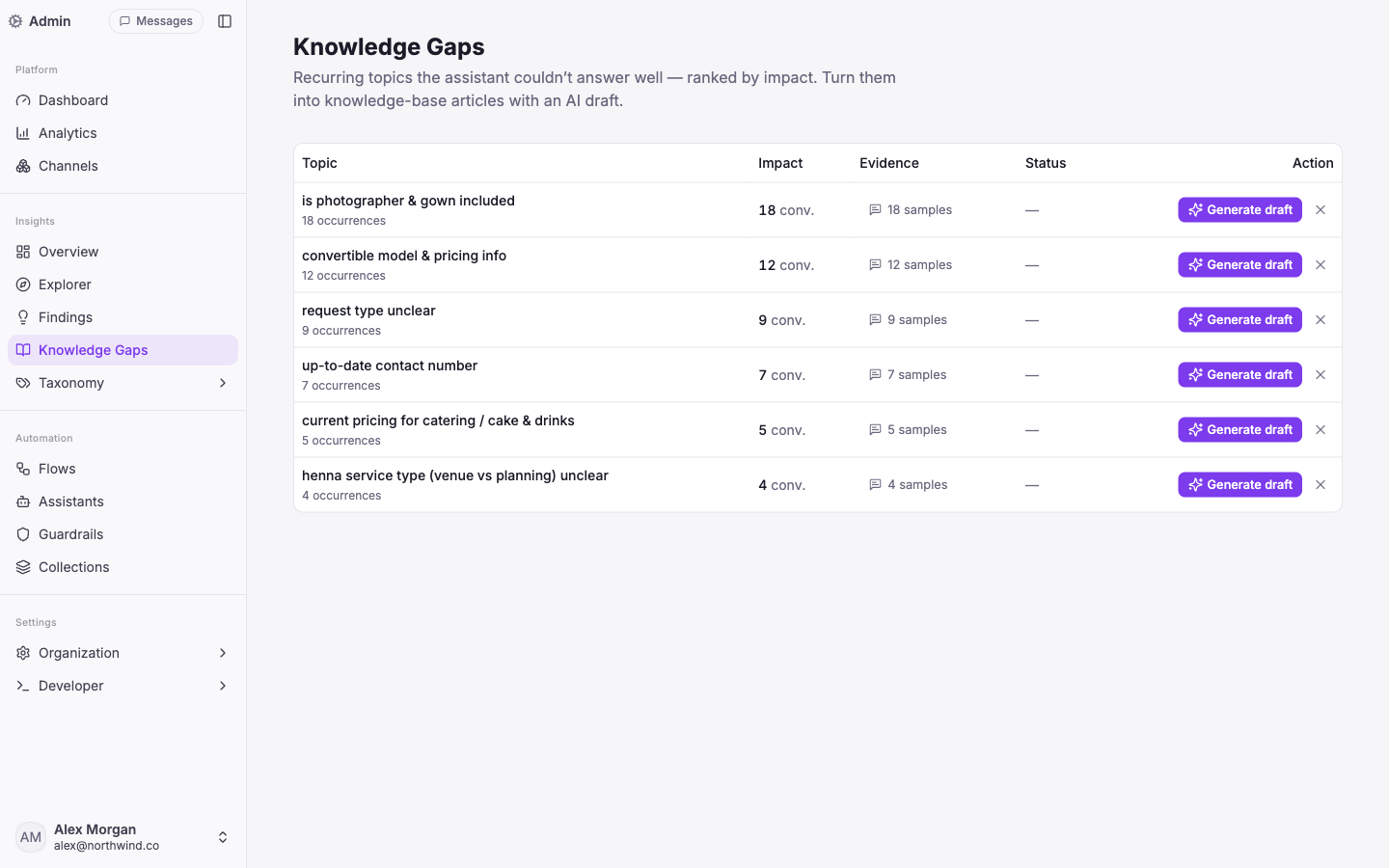
Why your AI chatbot can't answer — and how to fix it
The AI that resolves 66–72% of conversations isn't smarter than your bot — it's better informed. Most "dumb bot" failures are knowledge gaps, and they're fixable.
Agentic AI vs rule-based chatbots: what actually changes
Rule-based bots match keywords and route to a human. Agentic AI calls tools and finishes the job — here's where the difference shows up, and where it doesn't.
How much customer support can AI actually resolve?
Most published auto-resolution rates are inflated by how "resolved" is counted. Here's an honest framework — and the 66–72% we see in real deployments.