
How to reduce support tickets without hurting CSAT
Cut the repetitive 60–75% of your inbox in three layers — prevent at the source, deflect with a real agent, route the rest in one touch — without the stalling that tanks CSAT.

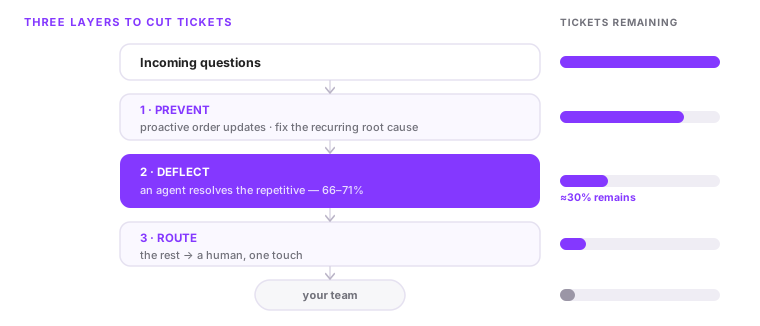
You don't reduce support tickets by hiding the contact button. That lowers the number on your dashboard and raises churn instead — the customer who couldn't reach you doesn't file a ticket, they just don't come back. Real ticket reduction attacks the volume in three layers: prevent it at the source, deflect the repetitive with an agent that actually resolves, and route the rest in one touch. Done right, the repetitive 60–75% of your inbox genuinely goes away — without punishing anyone.
First, the wrong way — so you don't ship it
Most "ticket deflection" advice is really about hiding demand: bury the email address, gate support behind a maze, drop in a bot that loops "I didn't understand that" until people give up. The count drops, so it looks like a win.
It isn't. Those customers still have the problem — and now a worse opinion of you. It's the same trap as counting "assumed resolutions": any support metric looks great if you're willing to fail people silently. So one rule governs everything below — a ticket only counts as reduced if the customer's problem went away, not just their message.
Layer 1 — Prevent the ticket at the source
The cheapest ticket is the one never sent. Before you automate a single answer, remove the reasons people write in:
- Proactive order updates. "Where's my order?" is the single biggest driver in most e-commerce inboxes. A shipping-status notification — sent, out for delivery, delayed — stops most of those messages before they happen.
- Fix the recurring root cause. If dozens of customers a week ask the same sizing question, the answer belongs on the product page, not in dozens of replies. The hard part is knowing which question that is — which is where the data comes in.
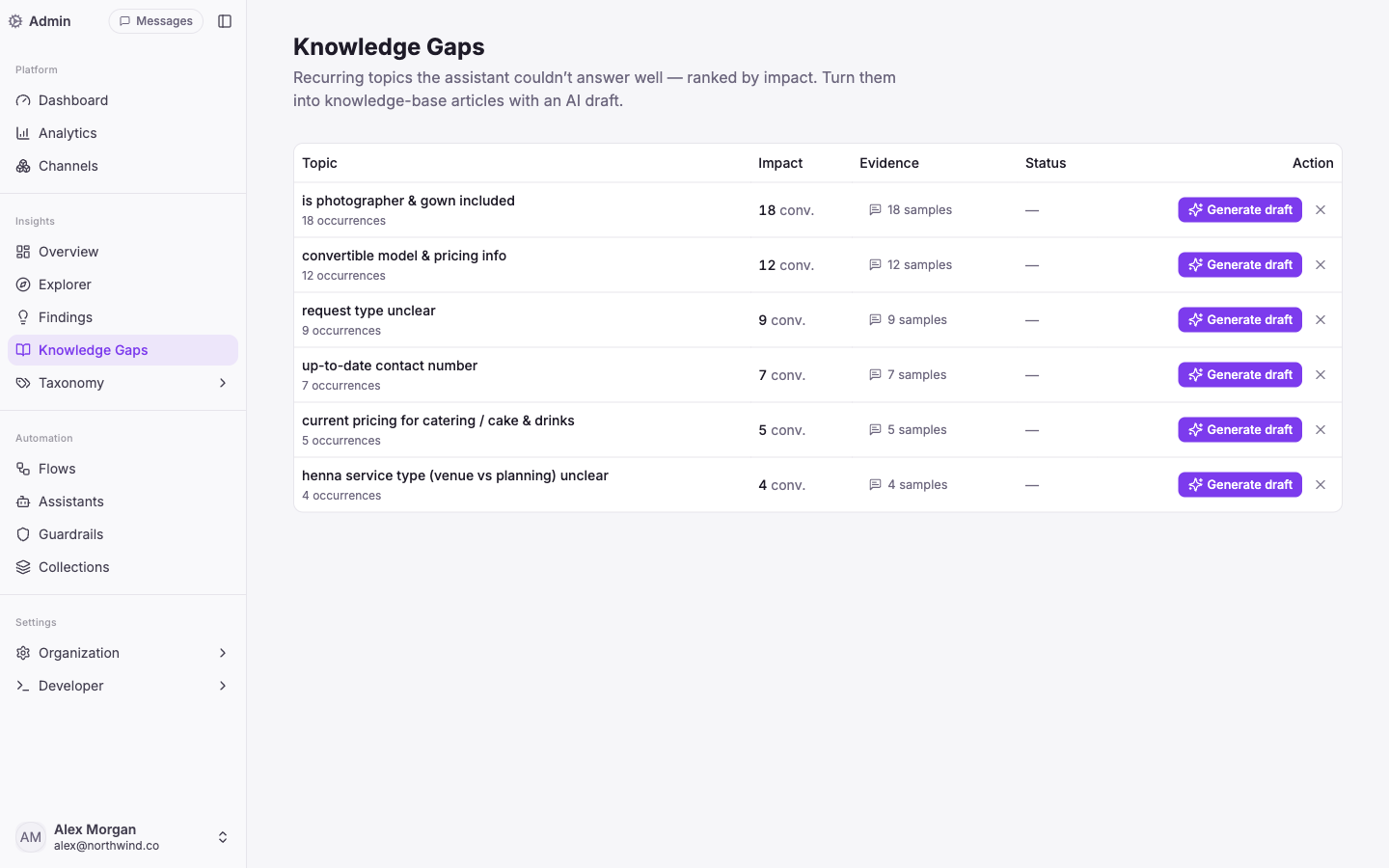
- Close your knowledge gaps. Every question the agent can't answer is a ticket waiting to recur. Vivollo's Conversation Intelligence ranks those gaps by how often they're asked, so you fix the high-impact ones first instead of guessing.
Layer 2 — Deflect the repetitive, with an agent not a wall
What's left after prevention is a stream of repetitive but answerable questions: order status, sizes, stock, prices, returns. This is where AI customer service belongs — but only the kind that resolves, not the kind that stalls. On social channels that same agent does more than cut tickets — it can turn DMs into qualified leads.
The difference is whether the bot can act. A scripted bot recites an FAQ and nothing more, so anything transactional bounces back to you. An agent that calls real tools looks up the order, checks live stock, and starts the return — finishing the job in the chat. That's how stores move real auto-resolution into the 66–72% range we see in production, on the channels customers actually use, like WhatsApp for a Shopify store. Deflection here means the ticket is resolved, not buried.
Layer 3 — Route the rest so one issue stays one ticket
Here's the lever almost everyone misses: a reopened ticket is a new ticket. The cases that genuinely need a human — the complaint, the exception, the judgment call — are also where reduction quietly leaks back. Hand a customer to a person without context and they re-explain from scratch; the answer misses; they write again. One issue has become three.
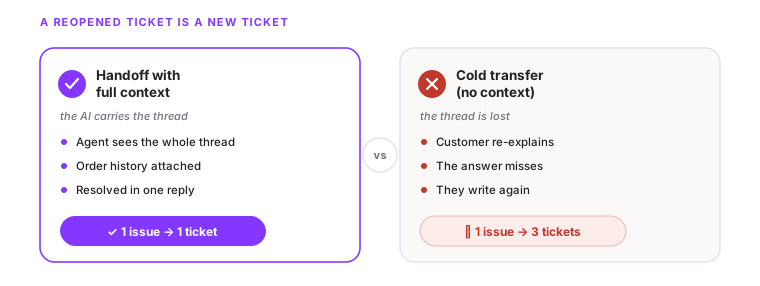
So the routing itself is a reduction lever. When the AI escalates, it should carry the full thread, order history and context to the right person, who resolves it once — not a cold transfer that makes the customer repeat themselves and reopens the thread twice more.
Don't confuse quieter with better
A lower ticket count only counts if the people behind it were helped — so read it next to CSAT on AI-handled chats and your reopen rate, the way we lay out in how much AI can actually resolve. A silent inbox of customers who gave up is worse than a busy one. Fewer tickets and steady satisfaction is what prevention plus real resolution produces — and what hiding the problem never will.
The fastest place to start is to find your own biggest recurring question — the one ticket that, removed, takes a chunk of the inbox with it. That's the first thing we map in a support deployment, before automating a single reply.
Common questions
- What's the fastest way to reduce support tickets?
Kill your single biggest recurring question first — for most stores that's "where's my order?", usually the largest category in the inbox. Proactive shipping updates stop it being sent, and an AI lookup resolves the ones that still come.
- Does a chatbot actually reduce support tickets?
Only if it resolves, not deflects. A scripted bot that loops people into giving up lowers the count while raising frustration and churn. An agent that looks up the order and acts genuinely removes the ticket. The difference is agentic vs rule-based.
- How many tickets can I realistically cut?
The repetitive, answerable, transactional share — typically 60–75% of an e-commerce inbox — is what can genuinely go away. See the range and how it's measured in how much AI can resolve.
- Will reducing tickets hurt customer satisfaction?
Not if you prevent and resolve. It hurts only when you "reduce" by hiding the contact option or stalling people until they quit. Measure CSAT and reopen rate alongside volume — fewer tickets with satisfied customers is the goal, not a silent inbox of people who gave up.
About the author

Bilgehan YılmazCo-Founder · Growth & CX
Co-founder of Vivollo and a serial entrepreneur on the growth and customer-experience side — also founder of DüğünBuketi.com and Grispi. He writes about turning support conversations into revenue.
Bilgehan Yılmaz →Keep reading
How much customer support can AI actually resolve?
Most published auto-resolution rates are inflated by how "resolved" is counted. Here's an honest framework — and the 66–72% we see in real deployments.
AI-to-human handoff: design it so nobody repeats themselves
AI resolves 66–72% of conversations in our deployments — handoff governs the rest. What triggers it, what context travels, and what happens after.
5 things AI customer support still can't do
Even the best AI resolves 66–72% of chats — so ~3 in 10 still reach a human. Five things AI support can't do, and why honest limits beat inflated vendor claims.